
Love After The Last Goodbye
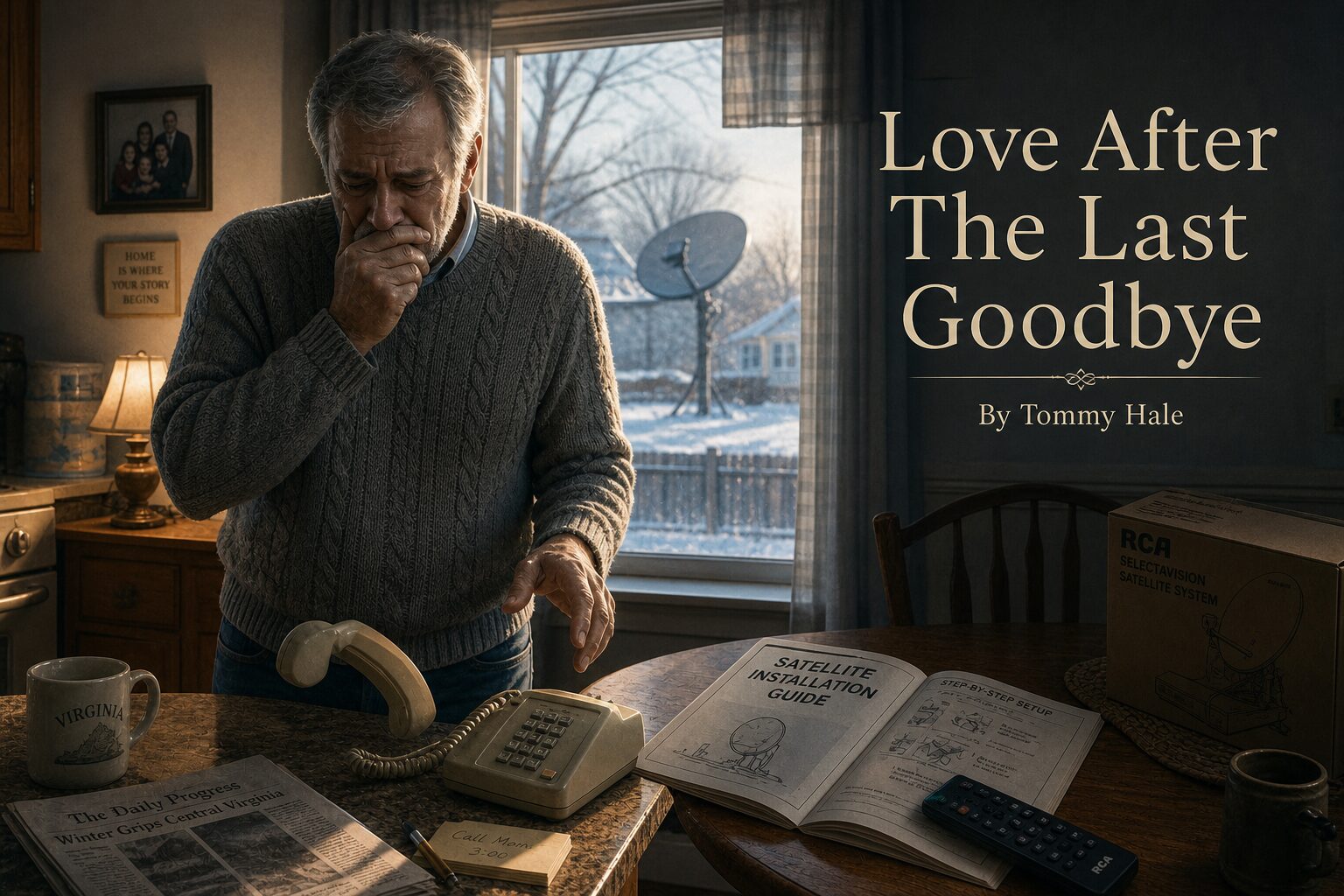
March 21, 1988, was a bright, bitterly wintry day. I was living in a small suburb of Suffolk, Virginia, watching a young man finish installing an enormous satellite dish in my backyard. I was elated, imagining the hundreds of channels that were now at my command. With the new remote clutched in my hand, I sat down and began eagerly paging through the manual, eager to learn how to make that big contraption move at the touch of a button.
In the middle of my excitement, the house phone rang. It was years before anyone I knew had a cellphone; calls still came through the single telephone sitting on our kitchen counter. My brother Jerry was on the line, calling from his home in Ahoskie, North Carolina, about forty-five minutes away.
I felt a flicker of annoyance at the interruption, but I walked over and answered. Jerry didn’t ease into the conversation. “Tommy Joe, Mom’s gone,” he said. For a moment, I misunderstood. “Where did she go?” I asked, picturing her driving off somewhere, telling no one. His reply came fast, with a bluntness that cut through the room: “She’s dead.”
The words slammed into me. I couldn’t breathe. It felt as if a sledgehammer had struck me square in the chest. The phone slipped from my hand as I stumbled backward, struggling to stay on my feet. Time stopped. My mind refused to accept what I had just heard. We had buried our father only eighteen months earlier; the thought that our mother was now gone, too, was more than I could comprehend.
After what felt like several minutes, I forced myself back to the phone and whispered, “What happened?” Jerry told me that he and his wife, Patty, had left for a Little League game around 10 a.m. When they returned around 11:45, Patty walked over to Mom’s house, just behind theirs. She found Mom lying on her bed, fully clothed, her hands folded over her chest and her eyes closed. The doctor later called it cardiac arrest, but those clinical words did nothing to soften the reality.
We spoke quietly about what needed to be done. I told him I would drive over around 4 p.m., and we would go together to see the funeral director.
After we hung up, I sank onto the couch, and the tears came in waves. I remember staring at nothing, asking questions that had no answers. How was I supposed to move forward without the two people who had always been there, who had shaped the very core of who I was? Why had God taken both of them from us so close together?
We had her body taken back to our hometown of Grundy, in southwest Virginia—an eight-hour drive from where I lived—and placed her in a crypt, head-to-head with Dad. For a long time after that, I drifted through my days. The loss hollowed out my faith in God and left me wondering whether any goodness was left in my life at all.
Thirty-eight years have passed since that chilly March morning. My heart has healed enough for me to live fully again, but it still aches whenever I linger too long on the memory of her passing. Writing these words has brought it all back—the phone call, the shock, the stunned silence that followed. Yet when I think of her now, what stays with me is not the moment she left, but the life she lived. I remember the laughter we shared, the steady love she poured into my brother and me, and the quiet kindness that spilled over into the lives of everyone around her.
If there is a lesson in this story, it is not that we should deny our grief, but that we must be gentle with it, and with ourselves. Grief needs its time and its tears, but it cannot be allowed to swallow the rest of our days. Each of us has our own appointed time to leave this world, and if we dwell too long in the shadow of loss, we risk losing the light that is still ours to live in. I don’t remember either of my parents grieving endlessly when their parents died. They mourned, they remembered, and then they found a way to keep going.
I hold close an old Irish saying that seems to capture what I have come to believe: “Death leaves a heartache no one can heal; love leaves a memory no one can steal.” Those memories are where my parents live now—safe, enduring, and, at last, a source of comfort more than sorrow.