My Favorite Sport
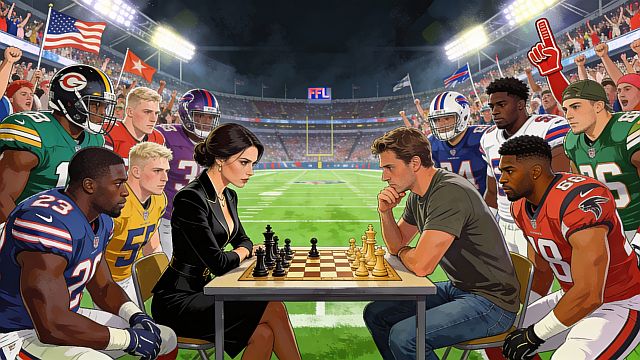
For most of my life, my favorite sport was football — specifically NFL football, the kind where enormous men in helmets collide violently while I heroically lift chips from bowl to mouth. Many of my Sundays were single-handedly sabotaged by the Washington Redskins — now the Washington Commanders — who developed a remarkable talent for turning promising drives into tragic comedies.
As I’ve gotten older, though, something strange has happened: I still watch them, but their losing no longer ruins my entire weekend. I’ve finally accepted that football is basically a legal, televised demolition derby for human bodies, with bonus commercials. Young men are encouraged to play it because if they’re great at it, they become extremely rich and nationally famous — and, later in life, extremely well acquainted with orthopedic surgeons, canes, wheelchairs, caregivers, and dementia.
So, what’s my favorite sport now? Chess. That’s right: I’ve traded in concussions for concentration. Chess is widely known as a “mind sport,” which is a polite way of saying, “You will sit very still and sweat only from the forehead.” Most people look at chess and say, “That’s not a sport, that’s what nerds do instead of going outside.” But the International Olympic Committee recognizes chess as a sport, so who are you going to believe: the IOC, or your lying eyes?
Traditional definitions insist that a sport requires physical exertion, skill, competition, and rules — which makes sense if you’re thinking about soccer or tennis, but less obvious when you’re thinking about a guy hunched over a board trying not to blunder his queen. My definition is more generous: if you’re doing something competitive that motivates you to move either your body or your brain, it’s a sport. That includes card games, board games, electronic games, and yes, the kind of physical effort that involves more than walking to the fridge between plays. Physical sports demand lots of body movement; mental sports demand lots of neuron shuffling, caffeine consumption, and occasional groaning. At the end of a long football game, players limp off the field with bruises; at the end of a long chess match, grandmasters stagger away with headaches, elevated heart rates, and the thousand-yard stare of someone who just realized they missed mate in three. Different muscles, same exhaustion.
