
Popeye Is Dying
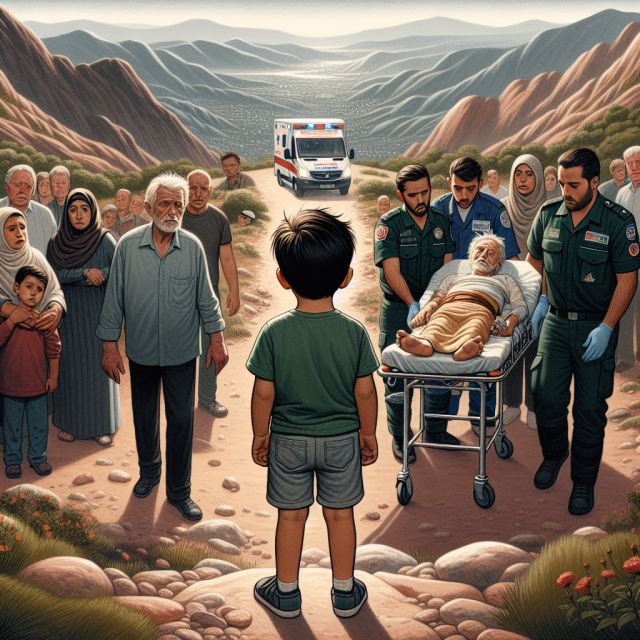
All four of my grandparents wrapped me in love as I grew from a skinny mountain boy into a young man, but my maternal grandfather, Lonnie McCoy—yes, one ofthoseMcCoys—held a special place in my heart. We called him “Popeye,” not for his comic‑strip muscles, but for the corncob pipe that seemed glued to his hand, always packed with Prince Albert. The sweet, blue curl of his tobacco smoke is one of the earliest comforts I can still summon.
I was about ten when word came that Popeye was dying. The message reached us like bad weather: sudden, heavy, unavoidable. We were called to his little house clinging to the side of the mountain, a place with no electricity, no running water, and barely enough flat ground for a front porch. There, the grown‑ups whispered the verdict in low, frightened voices—Popeye had tuberculosis. In 1951, in our corner of southwest Virginia, TB might as well have been a death sentence. We knew nothing of new drugs or breakthroughs; all we knew was that people who got “the consumption” went away and did not come back.
The women began to cry almost at once. Their wails filled the tiny yard and rolled down the hollow, raw and animal, as the medics eased Popeye onto the stretcher. Mountain men lived by the rule that real men don’t cry, so they just stood there with their hands shoved deep in their pockets, faces stiff, eyes wet but refusing to spill. I remember standing among them, small and confused, as the surrounding air seemed to thicken with fear. It felt like a gray fog had come down just on our side of the mountain, and in that fog everyone believed the same thing: Popeye was going to die.
The medics wore masks, their voices muffled as they gave quiet instructions and shouldered the stretcher down the rocky path. I had learned enough from my parents, to know that TB could float from one body to another on a cough or a sneeze, on a breath too close or a room too tight, and that knowledge made Popeye suddenly dangerous in a way that didn’t fit the man I loved. No one was coughing, no one sneezing, but still the medics’ masks stayed on. Watching him being carried toward the waiting ambulance at the bottom of the hill, I felt the world tilt. To a ten-year-old boy, if someone as solid as Popeye could be taken away, no one was truly safe.
They sent him to a hospital near Catawba, North Carolina, tucked in the western Piedmont, where the foothills are struggling to become the Blue Ridge Mountains. For two weeks my imagination did its worst work: I pictured dark rooms, iron beds, hollow‑eyed men coughing into stained handkerchiefs. At home, the adults spoke in half‑sentences and changed the subject when I walked into the room. It was my first close encounter with the idea that someone I loved might simply stop existing.
And then, as quietly as the bad news had first arrived, the good news followed. The tests showed Popeye did not have TB after all. Whatever had been stealing his breath was something less fearsome, something treatable, and soon enough the same narrow road that had carried him away carried him back. He lived on for another twenty-two years, dying at seventy-two with his family around him and his legend very much intact.
That episode marked a turning point in my childhood. Coal miners in our region lived with danger every day, and I knew the names of men who never came home from the deep places under the mountain. But miners were adults, almost mythical in their toughness; the possibility of their death felt distant, like a story told about someone else’s world. Popeye’s near‑death was different. This was not a stranger in a long dark hole in the mountain—it was my grandfather on a stretcher, my family’s grief spilling out where I could see it. For the first time, death stepped out of the shadows and stood where I could look it in the eye.
Now, with nearly eighty-five years behind me, that memory sits alongside many others of people I have loved and lost. The roll call of my family has grown shorter, and so many faces live only in the quiet corners of my mind. Yet, those memories do not haunt me; they keep me company. On slow, rainy afternoons, when the present softens and the past draws near, I sometimes find myself back on that mountainside, watching Popeye disappear into the ambulance and then, mercifully, return. I hope that when my own grandchildren, and even their children, settle into their own lazy, rainy days, they will remember me in the same way—with stories that surface unbidden, and with a warmth that lingers long after the telling.
Rex Strout said it well: “One trouble with living beyond your deserved number of years is that there’s always some reason to live another year. ”