
What Happens When I Die?
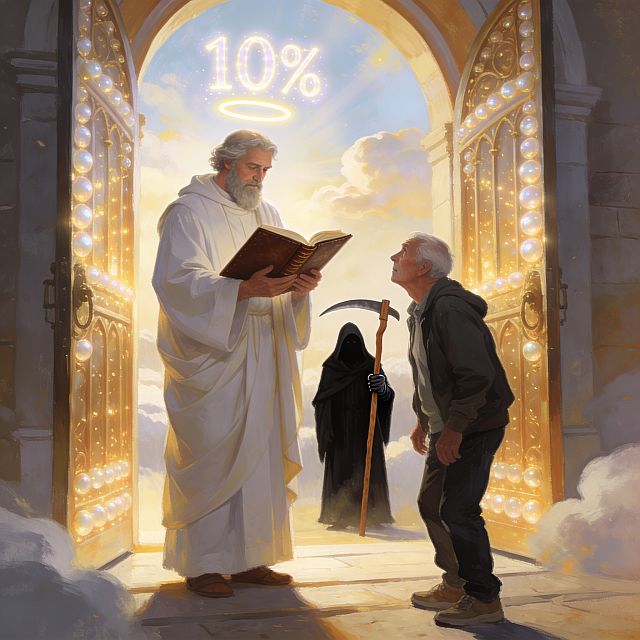
I have lived on this earth for over 31,000 days—eighty-five years of mornings, mistakes, prayers, and small victories. Lately, my thoughts have wandered more often to a question that eventually finds us all: what happens when my time here is done?
My Christian faith gives me a clear and comforting answer. If I have lived in accordance with God’s will, then I will be welcomed into Heaven, reunited with others who have walked that same path. Most days, I believe that with quiet confidence — perhaps 90 percent sure.
But that leaves a stubborn 10 percent.
That small fraction of doubt does not shout; it whispers. It asks questions I cannot fully silence. Does that make me, in part, an atheist? In a practical sense, I suppose it does. Doubt visits me from time to time, uninvited but persistent. Yet I have learned how to meet it—with prayer, with fellowship, and with the steady rhythm of faith practiced in everyday life. These things do not erase doubt, but they keep it in its place.
Still, I sometimes wonder what that doubtful part of me believes. If it had the final word, it would say this: When I take my last breath, that is the end. No gates, no reunion—just stillness. In that version of reality, the only trace I leave behind is the imprint I made on others. Kindnesses remembered, burdens lifted, moments shared. Those who think well of me may carry a piece of me forward; those who do not will let me fade quickly. Either way, my legacy becomes human, not divine.
So why does that 10 percent exist at all?
I think it is because I have lived in a time absent of the kind of unmistakable miracles described in Scripture. The Bible tells of seas parting, storms silenced with a word, multitudes fed from almost nothing, and lives transformed in an instant—blind eyes opened, the sick restored, the dead raised. These are not subtle events; they are undeniable, overwhelming displays of divine presence.
In my lifetime, I have witnessed nothing like that.
Yes, I have heard stories—accounts of near-death experiences, of tunnels of light, of glimpses of something beyond. These stories are powerful, and they strengthen belief. But I have also encountered something else. A cousin of mine was clinically dead for thirty-five minutes and then returned to life. When I asked him what he experienced, he answered simply: “Nothing. Just darkness. ” That answer, honest and unembellished, gave quiet strength to my lingering doubt.
And so I live with both parts of myself—the believer and the questioner. They do not cancel each other out; instead, they shape a more honest faith, one that is not blind, but chosen.
Now, as I look toward whatever comes next, one thought lingers with a touch of humor and a measure of sincerity: if I do find myself standing at the Pearly Gates, how exactly will I explain that 10 percent to Saint Peter?